Keys – How Blind is Blind?

“Marvelous beyond expression is the blindness of the people of this generation. Thousands reject the word of God as unworthy of belief and with eager confidence receive the deceptions of Satan.” Darkness Before Dawn, 23.

We have been given the greatest gift that heaven could give, and yet, so few realize it. Almost the whole world denies it, believing in it when they choose, expecting the goodness and mercy of God to be theirs when they want it. How many times have we heard or even said ourselves, I will live the way God wants me to live when this or that happens. But once we have this or that, we see not nor appreciate the God to whom we owe everything.

“That He might save the souls of perishing human beings, He made a gift of such magnitude that it can never be said that God could have made His gift, His donation to the human family, greater. His gift defies computation.” Our High Calling, 28.

“In this our day men choose to follow their own desires and their own will.

“Can we be surprised that there is so much spiritual blindness?” Manuscript 163, 1903.

“So great has been the spiritual blindness of men that they have sought to make of none effect the Word of God. They have declared by their traditions that the great plan of redemption was devised in order to abolish and make of none effect the law of God, when Calvary is the mighty argument that proves the immutability of the precepts of Jehovah. … There must be a searching out of the peculiar sins which have been offensive to God, which have dishonored His name and quenched the light of His Spirit and killed the first love from the soul. …

“Victory is assured through faith and obedience. … The work of overcoming is not restricted to the age of the martyrs. The conflict is for us, in these days of subtle temptation to worldliness, to self-security, to indulgence of pride, covetousness, false doctrines, and immorality of life.” That I May Know Him, 256.

Dear Lord, take away our blindness so that we are able to clearly see our true condition and that You are the remedy. Help us not to turn blindly away from You who loved us enough to give Your Son, nor from Him, who was willing to give His life to save ours.

Story – The Father of Instrumental Music

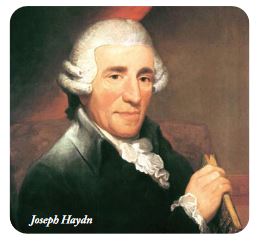
Joseph HaydnOne time, about two hundred years ago, a little boy named Joseph lived in Austria with his father and mother. At this time, Joseph was six years old. One day, little Joseph saw the schoolmaster playing a violin, and he was thrilled with the sweet sounds.

“Oh, if I could only play like that!” he said to himself. “If only my father could buy me a violin!”

But Joseph’s father was too poor to think of such a thing. So our little six-year-old decided to make a violin for himself. His violin was just two sticks.

One day, when his mother was playing on her small harp and his father was singing, little Joseph trotted out with his violin. He held the larger stick as he had seen the schoolmaster hold his violin, and used the smaller stick for a bow. Then he made believe play, and with his sweet little voice he joined in the singing. After that, whenever his parents sang, little Joseph played on his wooden violin.

About this time, a man who had charge of a church choir made up of little boys heard Joseph sing. The child’s voice was so sweet and clear that this man wanted Joseph to come and live with him and sing in his choir with the other little boys.

“Oh, how can I let him go?” said his mother. “He is only a baby.”

But Joseph’s father thought it was a good chance for his son to learn to sing. So Joseph was taken away from home to live with the choirmaster.

The poor little fellow had a hard time without his mother to take care of him. He really had no one to love him. Often his clothes were dirty, and he did not have proper food. But the choirmaster did not care. All he wanted was Joseph’s sweet voice in his choir. But though Joseph had to work very hard for one his age, and though he was often punished, he never complained.

“I shall be grateful to that man as long as I live for keeping me so hard at work,” he afterwards said. Does this not show that he had a very sweet spirit?

When he was eight years old, another choirmaster took him for his choir. Here Joseph learned to play a real violin as well as some other instruments. Here also he began to write on paper the notes of music that were always floating through his head. No one helped him to do this. It seemed to be in him to write music. He studied the music which others had written, and by working very hard he managed to make progress.

When he was sixteen, his voice gave out. Then the choirmaster did not want him any longer, and the boy was turned out in a large city to look after himself. Poor Joseph had a hard time. It almost seemed as if he would starve. Still he kept at his music.

Finally, a noble prince in Austria took him to his castle to be the director of his musicians. The prince lived miles away from any city. Here in the quiet and beauty of the country, Joseph found a happy home. He loved the prince, and the prince was very fond of him. Every day, this young musician had to write a new piece of music for the orchestra to play before the prince. With Joseph, this was a labor of love. It was because of this daily work that he gained such skill in writing music. And it was because of this skill that Francis Joseph Haydn is called “The Father of Instrumental Music.”

Francis Joseph Haydn lived with the prince for thirty years. Then the beloved prince died. Joseph Haydn was now a great man. From France and England and other countries, he received invitations. Everywhere he went he was given the greatest attention, and his music won him many new friends.

Joseph Haydn’s greatest piece of music is that famous oratorio called “Creation.” It was written when he was an old man, sixty-five years of age. When he was writing it, it was his custom to kneel before God every day and pray for divine help.

“At the thought of God my heart leaped for joy, and I could not help the music doing the same,” he said, when asked how his music was so cheerful.

“Creation” begins with many harsh tones that represent the time when the earth was without form and void, and everything was in chaos. Then, from those discordant tones comes one grand strain of beautiful harmony with the words, “Let there be light!”

“The music came from above,” said Haydn, pointing upward.

It is a noble thing to give to the world such wonderful music, for as long as time lasts, it will help to make people better.

True Education, Fifth Grade, ©1933, 171–174.

Inspiration – This Same Jesus Shall So Come

The time came for Christ to ascend to His Father’s throne. As a divine conqueror He was about to return with the trophies of victory to the heavenly courts. As the place of His ascension, He chose the spot so often hallowed by His presence while He dwelt among men. On reaching the Mount of Olives, Jesus led the way across the summit to the vicinity of Bethany. Here He paused, and the disciples gathered about Him. Then with hands outstretched in blessing, He slowly ascended from among them. And as the cloudy chariot of angels received Him out of their sight, the words came down to them, “Lo, I am with you alway, even unto the end of the world” (Matthew 28:20).

It is “this same Jesus” that is coming again, the One who, when He was on earth, “went about doing good, and healing all that were oppressed of the devil” (Acts 10:38). The voice of the mighty Healer penetrated the deaf ear. A word, a touch of His hand, opened blind eyes. He rebuked disease and banished fever. His voice reached the ears of the dying, and they arose in health and vigor. In whole villages there was not a moan of sickness in any house; for He had passed through them, and healed all their sick. And while He healed their diseases He taught the people the way of life. …

This same Jesus, compassionate, tender, is coming again. On the Mount of Olives He told His disciples the signs that will precede His coming. But the day and the hour of His coming He has not revealed. The exact time of the second coming of the Son of man is God’s mystery. The whole world is full of rioting, full of godless pleasure, is asleep, asleep in carnal security. Men are putting far off the coming of the Lord. They laugh at warnings. The proud boast is made, “All things continue as they were from the beginning” (2 Peter 3:4). “Tomorrow shall be as this day, and much more abundant” (Isaiah 56:12, last part). We will go deeper into pleasure-loving.

But Christ says, “Behold, I come as a thief” (Revelation 16:15). At the very time when the world is asking in scorn, “Where is the promise of His coming” (2 Peter 3:4)? the signs are fulfilling. While they cry, “Peace and safety” (1 Thessalonians 5:3), sudden destruction is coming. When the scorner, the rejecter of truth, has become presumptuous; when the routine of work in the various money-making lines is carried on without regard to principle; when the student is eagerly seeking knowledge of everything but his Bible, Christ comes as a thief.

The crisis is stealing gradually upon us. The sun shines in the heavens, passing over its usual round, and the heavens still declare the glory of God. Men are still eating and drinking, planting and building, marrying and giving in marriage. Merchants are still buying and selling. Men are jostling one against another, contending for the highest place. Pleasure-lovers are still crowding to theatres, horse-races, gambling hells. The highest excitement prevails, yet probation’s hour is fast closing, and every case is about to be eternally decided. Satan sees that his time is short. He has set all his agencies at work that men may be deceived, deluded, occupied, and entranced until the day of probation shall be ended, and the door of mercy forever shut.

Christ is coming with clouds and great glory. A multitude of shining angels will attend Him. He will come to raise the dead, and to change the living saints from glory to glory. He will come to honor those who have loved Him, and kept His commandments and to take them to Himself. He has not forgotten them nor His promise. There will be a re-linking of the family chain. When we look upon our dead, we may think of the morning when the trump of God shall sound, when “the dead shall be raised incorruptible, and we shall be changed” (1 Corinthians 15:52). A little longer and we shall see the King in His beauty, and He will present us “faultless before the presence of His glory with exceeding joy” (Jude 24). Wherefore, when He gave the signs of His coming, He said, “When these things begin to come to pass, then look up, and lift up your heads; for your redemption draweth nigh (Luke 21:28).” The Watchman, October 3, 1905.

Fulfilling His Purpose

A long time ago in the land of the Philistines, there was a feast. Many people from all the regions of the Philistines had come to this feast to honor their god Dagon in his temple because he had protected them from and defeated their enemy, Samson (Judges 16:23). The temple was filled with men and women, all the “lords of the Philistines.”

Chosen by God for the purpose of delivering His people, Samson was meant to be raised as a Nazarite, consecrated and set apart. He had been born into the right family, raised in the right way, given the right diet and the right background – everything he needed to fulfill God’s purpose for his life, the same as we as Seventh-day Adventists have been called to be and do. And yet, he chose to please himself. We can see the purpose, the mission, the cause and calling of God for this deliverer of Israel. And we can see how he chose instead to do his own will. We also see that even in his attempts to please himself, God’s purpose through him would still be carried out, but it cost Samson everything.

Defeated by his insistence to do his own will rather than God’s, Samson finds himself blind, with his hair shorn and absolutely powerless, bound, ridiculed and abused by the very people he was meant to conquer, but had been determined to be a part of through marriage. He was overwhelmed by the humiliation and horror of his current situation brought about by his own choices and actions. His heart cried out in sorrow because his eyes could not, and in that cry he asked the very question that many of us may have asked or are asking, “Lord, how did I get here?”

Twenty years had passed since Samson married the young woman of Timnah and he had killed 1,000 Philistines. He had judged Israel during that time in relative peace. He was now a grown man, but the choices of his youth had left a telling mark on his life as he continued to seek to please himself.

In Judges 16:1 the Bible says, “Now Samson went to Gaza … .” Did he go to investigate and determine the Philistines’ weaknesses and how they could be brought down so that Israel could finally be free from their enemy? No, he went to Gaza “and saw a harlot and went in to her.”

We read in Patriarchs and Prophets, 564: “After his victory the Israelites made Samson judge, and he ruled Israel for twenty years. But one wrong step prepares the way for another. Samson had transgressed the command of God by taking a wife from the Philistines, and again he ventured among them – now his deadly enemies – in the indulgence of unlawful passion. Trusting to his great strength, which had inspired the Philistines with such terror, he went boldly to Gaza, to visit a harlot of that place.” We also read in The Desire of Ages, 126: “Only he who has true faith is secure against presumption. For presumption is Satan’s counterfeit of faith. Faith claims God’s promises, and brings forth fruit in obedience. Presumption also claims those promises, but uses them as Satan did, to excuse transgression. Faith would have led our first parents to trust the love of God, and to obey His commands. Presumption led them to transgress His law, believing that His great love would save them from the consequence of their sin. It is not faith that claims the favor of heaven without complying with the conditions on which mercy is to be granted. Genuine faith has its foundation in the promises and provisions of Scriptures.”

Presumption is living your life the way you choose to, assuming that you will be okay until you decide when to change. Samson was presumptuous, like many young people are today. Many Adventists believe they will make changes in their lives when they see the Sunday law being passed, delaying their commitment to their own loss.

Samson went to Gaza to commit fornication with a harlot. Fornication is the act of being physically intimate with someone who is not your husband or wife. Paul said, “Now the body is not for sexual immorality [fornication] but for the Lord, and the Lord for the body. And God hath both raised up the Lord and will also raise us up by His power. Do you not know that your bodies are members of Christ? Shall I then take the members of Christ and make them members of a harlot? Certainly not! Or do you not know that he who is joined to a harlot is one body with her? For ‘the two,’ He says, ‘shall become one flesh.’ But he who is joined to the Lord is one spirit with Him. … Every sin that a man does is outside the body, but he who commits sexual immorality [fornication] sins against his own body. Or do you not know that your body is the temple of the Holy Spirit who is in you, whom you have from God, and you are not your own? For you were bought at a price; therefore glorify God in your body and your spirit, which are God’s” (1 Corinthians 6:1320).

Fornication cheapens and objectifies the body, degrades you in the mind of the other person and sends a message that you have little self-value and are not worth committing to. Remember, however, that you have been bought with an extremely high price and your body belongs to God.

“When the Gazites were told, ‘Samson has come here!’ they surrounded the place and lay in wait for him all night at the gate of the city. They were quiet all night, saying, ‘In the morning, when it is daylight, we will kill him’ ” (Judges 16:2). The Philistines had been exposed to the Israelite culture and they knew that, as an Israelite, what Samson was doing was wrong. This gave them an opportunity to lay a trap for him by means of which he could have perished that day. However, “At midnight Samson was aroused. The accusing voice of conscience filled him with remorse, as he remembered that he had broken his vow as a Nazarite. But notwithstanding his sin, God’s mercy had not forsaken him. His prodigious strength again served to deliver him. Going to the city gate, he wrenched it from its place and carried it, with its posts and bars, to the top of a hill on the way to Hebron.” Patriarchs and Prophets, 565.

Samson’s narrow escape did not cause him to surrender his ungodly, pleasure-seeking ways. “Afterward it happened that he loved a woman in the Valley of Sorek, whose name was Delilah” (Judges 16:4). We are reminded in Ecclesiastes 8:11, “Because the sentence against an evil work is not executed speedily, therefore the heart of the sons of men is fully set in them to do evil.”

“But even this narrow escape did not stay his evil course. He did not again venture among the Philistines, but he continued to seek those sensuous pleasures that were luring him to ruin. ‘He loved a woman in the valley of Sorek,’ not far from his own birthplace. Her name was Delilah, ‘the consumer.’  The vale of Sorek was celebrated for its vineyards; these also had a temptation for the wavering Nazarite, who had already indulged in the use of wine, thus breaking another tie that bound him to purity and to God. The Philistines kept a vigilant watch over the movements of their enemy, and when he degraded himself by this new attachment, they determined, through Delilah, to accomplish his ruin.” Ibid., 565.

How could Samson keep breaking the ties that bound him to God over and over again? But maybe an equally important question to ask is, how does this keep happening to us, over and over again?

The Philistines offered Delilah a great deal of wealth to find out how they might overcome Samson. With flattery and feigned caring, Delilah sought to ingratiate herself with Samson until finally she says in Judges 16:6, “ ‘Please tell me where your great strength lies, and with what you may be bound to afflict you.’ ” Though his actions may cause us to think that Samson must have been dull, he did in fact see through Delilah’s attempt to discover the secret of his strength. He determined to have some fun with her and the Philistines.

Beginning in Judges 16:7–16, we read of Delilah’s efforts to learn the secret of Samson’s strength. First he suggested that she bind him with “seven fresh bowstrings, not yet dried,” then that she bind him with “new ropes that had never been used.” Neither of these revealed his secret.

Interestingly, while Delilah was attempting to learn the secret of his strength, Samson was aware of her motive. He knew the Philistines were there. He wasn’t being duped, but he still determined to remain with her in spite of her treachery. He was so confident in his own abilities and in what God had done for him in the past that he had no fear. Although he had repeatedly violated his Nazarite vows, God had always come through for him, and he was not afraid of what these men could do to him.

Again, Delilah pleaded with Samson to tell her his secret. He suggested that she should “weave the seven locks of my head into the web of the loom.” Now he was getting closer to the truth regarding how his strength could be taken from him. Can this happen to us? We can live too close to the boundaries of right with the risk of going over.

Of course, we know that this did not reveal Samson’s secret. Delilah accused him, “ ‘How can you say, “I love you,” when your heart is not with me? You have mocked me these three times, and have not told me where your great strength lies’ ” (verse 15). Then she pestered him day after day, begging him to tell her the secret of his strength “so that his soul was vexed to death” (verse 16).

After many days of enduring Delilah’s pleading and begging, the unthinkable happened. He told her the truth. “… he told her all his heart, and said to her, ‘No razor has ever come upon my head, for I have been a Nazarite to God from my mother’s womb. If I am shaven, then my strength will leave me, and I shall become weak, and be like any other man’ ” (verse 17). Looking at his life, Samson must have realized that he was not the person he was supposed to be and that he had violated almost every part of the vow he had taken. His tone and expression both must have shown the great disappointment he felt in himself and he finally revealed the truth.

“When Delilah saw that he had told her all his heart, she sent and called for the lords of the Philistines, saying, ‘Come up once more, for he has told me all his heart.’ So the lords of the Philistines came up to her and brought the money in their hand” (verse 18). They were so sure it would work this time that they brought Delilah’s payment with them.

The Bible contains some scary Scriptures: “The hour of His judgment has come” (Revelation 14:7–11), “I never knew you, depart from me …” (Matthew 7:21–23). I believe that Judges 16:20 should be included in that group of texts, “But he did not know that the Lord had departed from him.” Though Delilah had cut his hair, Samson intended to escape as he had previously. Samson’s confidence was in himself, his own ability and strength, but he had stepped over the edge and God had left him.

Samson’s hair was a sign of his consecration to God and the seven locks represented completeness, the perfection of that commitment. They also represent the seventh-day Sabbath which is the sign of our commitment to God, as Seventh-day Adventists, in the last crisis. If you violate that belief, God will depart from you and you will be lost. There is a parallel in this story for us today.

Samson’s strength was gone. He was captured and bound. His eyes were burned out with hot metal rods. He was a prisoner of the Philistines.

Chained in the temple, listening as the Philistines sang the praises of their god Dagon, pelted with food, laughed at and mocked, Samson felt shame and humiliation. I want to suggest to you that he began to remember his faithful parents who did the best they could to direct him in the right path, his Nazarite vow, his consecration to God, his mission, his purpose, and how good God had been to him and that He would save to the uttermost. But he also remembered how he had completely disregarded all of it. His heart ached, but he could shed no tears. So he cried out to the Lord, “O Adonai Yahweh [Lord God], remember me, I pray! Strengthen me, I pray, just this once, O Elohim [God], that I may with one blow take vengeance on the Philistines for my two eyes” (Judges 16:28)!

God understands the cry of a penitent heart. Samson used the most personal name of God that he knew, he confessed that he had dishonored and rejected God, and he knew that God deserved better than what he had given Him, but he pleaded for help one more time.

Bracing himself against the pillars of the temple, Samson cried out, “Let me die with the Philistines” (verse 30, first part)! At that moment, Samson realized that the destroyer of the Philistines was exactly what God had called him to be from the beginning, and he finally accepted that call. God answered Samson’s prayer and when he pushed with all his might, the temple fell on all the lords and all the people.

All his life Samson had served himself. He now recognized that he did not deserve the favor of God, but he determined to obey the purpose that God had for his life. With the destruction of the temple, he brought down the pride, the lust, the oppression, the presumption of the Philistines, to honor God. The Bible says, “So the dead that he killed at his death were more than he had killed in his life.” This was such a devastating event that when Samson’s brothers came to take his body home for burial, not one Philistine tried to stop them.

“God’s promise that through Samson He would ‘begin to deliver Israel out of the hand of the Philistines’ was fulfilled; but how dark and terrible the record of that life which might have been a praise to God and glory to the nation! Had Samson been true to his divine calling, the purpose of God could have been accomplished in his honor and exaltation. But he yielded to temptation and proved untrue to his trust, and his mission was fulfilled in defeat, bondage, and death.” Patriarchs and Prophets, 567.

So here is the question: After Samson delivered the crushing blow to the Philistines and became the very thing he first neglected, had he now been faithful to his calling? Do you believe that God forgave Samson? Do you believe He will forgive you?

Friends, it is not until we as Christians die to self that Christ can cause us to really live in Him. It is only when pride, selfishness, lust, and presumption have been removed from our lives that we can truly be used by God for His purpose. Maybe you haven’t lived the way you know the Lord wanted you to live. Or maybe you feel you’ve gone too far. Maybe you are a parent with a child who has left the faith for some reason. Maybe you are that child. You must remember that “He who began a good work in you” can and will perform it. The Bible says, “For whoever calls on the name of the Lord shall be saved” (Romans 10:13). This is the decision you have to make. God is merciful and loving and willing to forgive, but He will never force you to love Him or give your heart to Him. That is something you must be willing to do.

What a wonderful thought that God does not forget, nor does He easily give up on us. The essential point that we must consider is that there is a line that we can cross and it could be too late. We do not want to tempt God and be presumptuous regarding His love for us.

It may be that the experience of Samson is not your experience at all. Maybe you have been true to what you believe has been the purpose God has for your life and you want to remain committed to God. It is not necessary to abandon your faith or God’s calling and then come back to have a testimony. The person who follows God’s leading and stays the course has a powerful testimony to the strength and care of Jesus.

But, if you can identify with the experience of Samson and want to have a change in your life, if you want to follow the purpose and will of God, then you must commit your life to Him and ask Him to lead you. I believe that Samson said in his heart the words of Micah 7:8, 9: “Do not rejoice over me, my enemy; when I fall, I will arise; when I sit in darkness, the Lord will be a light to me. I will bear the indignation of the Lord, because I have sinned against Him, until He pleads my case and executes justice for me. He will bring me forth to the light; I will see His righteousness.”

God does not forsake a single one of His children. He has chosen each of us for a purpose and even if it is our choice to enjoy the pleasures of this world for a time, He is still able to fulfill His purposes, and may yet do so, through us. But don’t wait until it is too late.

Why have you chosen me,

Out of millions Your child to be.

You know all the wrong I have done.


O how could You pardon me,

Forgive my iniquity,

To save me gave Jesus Your Son.


But Lord help me be,

What You want me to be.

Your word I will strive to obey,

My life I now give for You I will live,

And walk by Your side all the way.


I am amazed to know,

That a God so great could love me so.

He’s willing and wanting to bless.


His grace is so wonderful,

His mercy so bountiful,

I can’t understand it I confess.


O Lord, help me to be

What You want me to be,

Your word I will strive to obey.

My heart and life I now give

For You, I will live

And walk by Your side all the way.

(Unless appearing in quoted references or otherwise identified, Bible texts are from the New King James Version.)

Pastor Damien Jenkins was raised in a non-religious home, but at the age of 18 was introduced to the Gospel and his life was forever changed. Today he is pastor of the Water of Life Free Seventh-day Adventist Church in Hohenwald, Tennessee. He enjoys apologetics, Bible history, expounding on the topic of righteousness by faith and making the Bible simple and easy to understand.
To Know and To Love Jesus

Many of us today claim the name of Jesus Christ and proclaim that we know Him personally. We become “Christians,” which means that we are followers of Christ. But are we really following Jesus? Do we truly know Him intimately, or do we just have a passive love for Him?

John writes, “We love Him, because He first loved us” (1 John 4:19). Our love for Him must come from our knowledge of Jesus if we are to love Him. We declare our love for the Father and Jesus because of what They have done for us. “For God so loved the world that He gave His only begotten Son, that whoever believes in Him should not perish but have everlasting life” (John 3:16). God’s love is one of infinite love and sacrifice. However, the love we return is initially a passive love, one brought on by the action of another. If it remains passive, it runs the danger of growing stagnant or even fading.

If we are to keep this love alive and growing, we must change it into an active love. An active love is one that is based on interaction and intimacy with each other. We can think of it in terms of a marriage, where both parties are daily interacting with one another and getting to know each other’s habits and growing together to become one person with two identities. But what happens if we start to become distant from one another? Does the love grow or become passive? We may have genuinely been attracted to the other person. We may have loved their company and desired to be with them early on, but as life goes on, something changes, and we do not have the same relationship as before.

If this can happen with a man and woman, it can also happen between man and God. In every relationship there is usually one person constantly reaching out and trying to make the relationship better. This is the way it is with Jesus. He is always reaching out to us to bring us closer to Him. Yet, unless we reach out to Him, our “marriage” to Jesus will become one sided. One of my favorite scriptures is Ephesians 5:25, 26: “Husbands, love your wives, just as Christ also loved the church and gave Himself for her, that He might sanctify and cleanse her with the washing of water by the word.”

This scripture shows the relationship that must exist between God and man, “just as Christ loved the church [or us].” What is that love? It is an intimate, interactive, daily interchange between us and God. If we love God, we will want to know him better than anyone else on this earth. So back to the question, do we truly know Jesus? We can’t just love Him so we can have eternal life, or out of fear of the retribution we face because of our sins. We must love Jesus because of who He is and the love that He has for us. Let’s study a little bit about the One we say we love. There is so much about Jesus in the Bible, we can just briefly look at an overview of it, but that is a good place to start.
Jesus wants to know us, too, so He starts off by reminding us to find our first love again. “Nevertheless I have this against you, that you have left your first love” (Revelation 2:4).

Who is this Jesus with whom we say we want to be associated? “For unto us a Child is born, unto us a Son is given; and the government will be upon His shoulder. And His name will be called Wonderful, Counselor, Mighty God, Everlasting Father, Prince of Peace” (Isaiah 9:6). According to Isaiah, Jesus was called our “Mighty God, Everlasting Father.” He was not some second-rate person of the Godhead. No, He was the embodiment of the Godhead with full authority. When He came to this earth to lay down His life for us, the government of God came with Him. His gift was so great that heaven was imperiled because of His sacrifice. He became human to show how humanity can be joined with divinity. He was the Majesty of heaven, the Commander-in-Chief of the armies of heaven, the Prince of heaven who brings peace to everyone who will come to Him. He is the gospel embodied.

“The value of a gift is proportionate to its adaptability to the needs of perishing souls. When Christ gave Himself, He opened up a spiritual fountain of divine influence, that by faith in Him, man might partake of the divine nature. In Christ is gathered all the glory of the Father. In Him is all the fullness of the Godhead. He is the brightness of the Father’s glory and the express image of His person. The glory of the attributes of God are expressed in His character. Every page of the New Testament Scriptures shines with His light. Every text is a diamond, touched and irradiated by the divine rays. The Gospel is Christ unfolded, and Christ is the Gospel embodied. We are not to worship the Gospel, but Christ, the Lord of the Gospel. The Gospel is glorious because it is made up of Christ’s righteousness. Our Saviour is a perfect representation of God on the one hand, and a perfect representation of humanity on the other. Thus He has combined divinity and humanity.” The Signs of the Times, November 24, 1898.

Jesus was not only our sacrifice, but our Counselor, Instructor and Comforter. As we spend time with Him, He is there to guide and teach us by His example, to comfort us in trials and to rejoice with us in triumph. He can do this because He is also the Alpha and Omega, the Beginning and the End, the First and the Last. (See Revelation 22:13.) He knows all about us, so He, and only He, is qualified to teach us infinite love. He knows the end from the beginning, so He is ready to guide us along our journey.

“I will give of the fountain of the water of life freely to him who thirsts” (Revelation 21:6, last part). To receive this life-saving water, we must drink of it. Jesus told the woman at the well that the water He gives is a fountain of water. “Jesus answered and said to her, ‘Whoever drinks of this water will thirst again, but whoever drinks of the water that I shall give him will never thirst. But the water that I shall give him will become in him a fountain of water springing up into everlasting life’ ” (John 4:13, 14). This fountain of water springing up is the ever-increasing love for Him that grows within us. As we learn of Him, the knowledge will create a deeper desire for Him. Jesus is the living water of life. He does not just give us a drink from a river or a fountain to quench our thirst, but quenches it with every moment we spend learning of Him.

Jesus also calls Himself the “bread of life.” John 6:35 says, “And Jesus said to them, ‘I am the bread of life. He who comes to Me shall never hunger, and he who believes in Me shall never thirst.’ ” And in John 7:38 He says, “He who believes in Me, as the Scripture has said, out of his heart will flow rivers of living water.”

Each day we must eat food to sustain our lives. So it is with our spiritual lives as well. The love that we feel toward Jesus grows as we make Him part of our daily walk. We must “eat” the word of God. Just as food digests to nourish our bodies, our daily study of God’s word is digested into our minds and hearts. By making the word of God part of our daily routine, we learn not only what we believe in, but also in Whom we believe.

“Oh, it makes every difference with those who study the Scriptures as to what and how they shall understand the word, whether they eat it or not. The word of God, if eaten, will give spiritual sinew and muscle. Those who eat and digest this word will practice it.” The Review and Herald, August 13, 1959.

“We should eat the flesh and drink the blood of the Son of God; that is, carefully study the Word, eat it, digest it, make it a part of our being. We are to live the Word, not keep it apart from our lives. The character of Christ is to be our character. We are to be transformed by the renewing of our hearts. Here is our only safety. Nothing can separate a living Christian from God.” Ibid., November 27, 1900.

We can have confidence in Jesus. David and Moses proclaimed Him to be the Rock of salvation and righteousness. David said, “The Lord is my rock and my fortress and my deliverer; my God, my strength, in whom I will trust; my shield and the horn of my salvation, my stronghold” (Psalm 18:2). And Moses said, “He is the Rock, His work is perfect; for all His ways are justice, a God of truth and without injustice; righteous and upright is He” (Deuteronomy 32:4).

Jesus said that we must build our relations with Him to have a strong foundation. He is the Rock that cannot be moved. Our love for Jesus will become as immovable as a rock when He is at the center of our lives. “But why do you call Me ‘Lord, Lord,’ and not do the things which I say? Whoever comes to Me, and hears My sayings and does them, I will show you whom he is like: He is like a man building a house, who dug deep and laid the foundation on the rock. And when the flood arose, the stream beat vehemently against that house, and could not shake it, for it was founded on the rock” (Luke 6:46–48). When we know Jesus and build on His word, following all that He says, we become grounded in His love.

Have you ever seen the love that a dog gives his master? It is unconditional. Even when the master does not give the dog everything it wants, that dog will still look at his master with love and affection. This is because to the dog his master is the center of its life. The master becomes the dog’s trainer, feeder, and protector. The dog loves his master because it knows that the master is looking out for it.

Jesus is called our Mediator and Advocate. He is there to protect us, stand up for us, feed us, and give us the things that are good for us. By loving and obeying the Master we can have confidence, knowing Jesus has only our good in mind. A human may mistreat his dog, but Jesus never does anything that will harm us. We may be called on to sacrifice for Him, yet that sacrifice is for our good. In return, Jesus promises to be our Advocate to the Father. Even though our sins may be many, Jesus will only present His righteousness before the Father in our behalf. “My little children, these things I write to you, so that you may not sin. And if anyone sins, we have an Advocate with the Father, Jesus Christ the righteous” (1 John 2:1). “For there is one God and one Mediator between God and men, the Man Christ Jesus” (1 Timothy 2:5).

Jesus is called the Good Shepherd who gently moves His sheep on the path they should follow. If they listen to His voice, they will never get lost. As they fix their eyes on Him, He guides them to the green pastures of life in Him. Jesus said, “ ‘I am the good shepherd. The good shepherd gives His life for the sheep. … I am the good shepherd; and I know My sheep, and am known by My own’ ” (John 10:11, 14). Jesus laid down His life for us and paid an extremely high price, one that we cannot even fathom. It will be a subject we will contemplate for eternity.
Those who know Jesus will hear His voice as He daily leads them. His sheep will not follow another voice. They will hear the melody of His sweet speech and be drawn closer and closer to Him. There will be other voices that will try to wile them away from their true Beloved, but God’s people will always have their eyes and ears fixed on the Good Shepherd. By spending time to get to know Jesus, they will not be enticed to follow a different love. True Christians will reject the enticements of the world that separate them from Jesus.

In Jesus is the truth. He proclaimed it of Himself. “Jesus said to him [Thomas], ‘I am the way, the truth, and the life. No one comes to the Father except through Me’ ” (John 14:6). Jesus not only gives us life, but shows us the way to live it. He imparts to us the truth that only He can give. He not only frees us from sin, but also deception. “Then Jesus said to those Jews who believed Him, ‘If you abide in My word, you are My disciples indeed. And you shall know the truth, and the truth shall make you free’ ” (John 8:31, 32). However, notice the condition. We must abide in His word, or another way of saying it is to obey His commandments. We cannot abide in Jesus if we break His law.

The law of God shows us His love for mankind. It is the very foundation of that love. Without it, we could have no confidence in Jesus. The law sets forth the way for us to love Jesus, and by obeying it, we show our love for Him. “For Christ is the end [or fullness] of the law for righteousness to everyone who believes” (Romans 10:4). We obtain the perfect gift of grace that is given freely to all, but our obedience to God’s law shows the love we feel for Jesus. “I do not set aside the grace of God; for if righteousness comes through the law, then Christ died in vain” (Galatians 2:21). “Do we then make void the law through faith? Certainly not! On the contrary, we establish the law” (Romans 3:31).

Jesus also knows what we are going through. He is our High Priest in heaven. His angels are always busy sending their reports to Him. He sympathizes with us as we go through each trial, each struggle, and each temptation. He understands because He also went through these same struggles while on earth. Jesus was a boy like any other boy, except His mind was fixed on the workings of God. As He grew, He was harassed and teased like many other children. When He reached adulthood, He was taunted because of His birth, but Jesus never let the evil gossip distract Him from His mission to do His Father’s work. Through each struggle, He prayed to His Father in heaven and the Holy Spirit was sent to comfort Him. Because of this faithfulness, He fulfilled His mission on earth so that He could sit at the right hand of God the Father and be our High Priest to minister for us. “For we do not have a High Priest who cannot sympathize with our weaknesses, but was in all points tempted as we are, yet without sin” (Hebrews 4:15). There is not one temptation that we go through that He cannot understand. He knows our hereditary tendencies that Satan uses against us. Jesus is faithful, and as our High Priest and Elder Brother, He is ready to help us at a moment’s notice. He desires for us to pray to Him for help so He may send the Holy Spirit to comfort us.

“Jesus says, ‘Take My yoke upon you’ (Matthew 11:29, first part). If we were bearing His yoke, we would not be wearing yokes of our own manufacturing. We would not be impatient, full of fault-finding, and hatred toward one another. If we wear the yoke of Christ, we will be patient, loving, and unrevengeful under injury; for we shall be learning of Him who is meek and lowly of heart. If we are indeed the followers of Christ, we shall be called upon to bear reproach, but if we are not understood, if we are falsely accused, we must not be discouraged, but remember that our Lord suffered mockery and scorn, and even the chief priests and rulers hedged up His way, and falsely accused Him of evil. Whatever may befall us, we should look to Jesus, knowing that He is our best Friend, or Elder Brother.” The Signs of the Times, January 26, 1891.

Many times, we might feel discouraged because of others or because we see our own faults, but Jesus does not want us to feel that way. In Matthew 11:28, 29, He says, “Come to Me, all you who labor and are heavy laden, and I will give you rest. Take My yoke upon you and learn from Me, for I am gentle and lowly in heart, and you will find rest for your souls.” He enjoins us to take upon ourselves His part of the yoke. It is much lighter and gives comfort when in despair. When we follow His example and become meek and humble, He takes on our troubles and bears them for us. By being yoked up with Jesus, He promises to lighten our load. He will help us bear the burden as we work with Him.
When thinking about this yoke, we might contemplate Jesus’ willingness to get in the yoke with us. He is willing to take on the struggle that we are dealing with. If we are to be like Jesus, how much more should we help others in their time of need? When we realize that we are no better than the poorest, most destitute person on the earth, it is then that we can love others better than ourselves. Jesus loves all these people. If we are following in His footsteps, if we have the love of Jesus in our hearts, our care and understanding will go before us to gently help them to find the hope we have in Jesus.

Isaiah 53:3 states of Jesus: “He is despised and rejected by men, a Man of sorrows and acquainted with grief. And we hid, as it were, our faces from Him; He was despised, and we did not esteem Him.” Jesus has been despised by the world because they did not know Him. They never took the time to get to know the God they say they follow. He has been rejected by the majority of mankind, yet He still loves them all. He is not a man of sorrows because He was tortured and crucified, but because His people, whom He created, do not reciprocate the love He has for them.
Many may have experienced loving someone who did not return that love. Jesus experiences this every day. He gave all He could to make a way for us to be with Him, yet many times, we “esteem Him not.” Many say, “I love Jesus and obey Him in all things.” Yet as we look deeper into the love of Jesus, His goodness, His lovingkindness, we will see that we are lacking. We can always do better, always do more, and always have more love for His people, those who profess Him and even those who do not.

Jesus told the chief priest of Israel that He is the great “I AM” (John 8:58). This was significant because He was proclaiming to be the God that brought them out of Egypt and the One who gave Moses the ten commandments on Mt. Sinai. But He is also called by other names. “And the Lord passed before him [Moses] and proclaimed, ‘The Lord, the Lord God, merciful and gracious, longsuffering, and abounding in goodness and truth’ ” (Exodus 34:6). Jesus is also identified by John as the Creator. “In the beginning was the Word, and the Word was with God, and the Word was God. He was in the beginning with God. All things were made through Him, and without Him nothing was made that was made” (John 1:1–3).

Jesus is the fullness of goodness and longsuffering. He is always gracious and merciful. We should thank Him daily for His mercy and longsuffering with us. We are erring humans that need His divine Holy Spirit to change us. If we are going to be like Jesus, and He says we must become like Him and have His mind and His character, then we must learn more about Him. We must make Him part of our diet. We must feast on every word that proceeds from His mouth, and we must pray without ceasing that He will change us into His perfect image.

The love of Jesus is something we can never repay. He sacrificed His life in heaven as well as His life on earth so that we could know Him better. He poured Himself out for mankind so that we might see His goodness. His love is a perfect love, and if we behold Him daily and fervently pray for His Holy Spirit, He has promised to show Himself to us and perfect our character to be like His. To know and to love Jesus is to have confidence in Whom we have believed. So do not be discouraged, for we have a great and powerful God that is reaching out to each of us today. All we have to do is to accept the offer and daily walk with Him.

(Unless appearing in quoted references or otherwise identified, Bible texts are from the New King James Version.)

Mike Wells is director of Anointing Oil Ministries.

A Hundredfold Now

There are in the Scriptures thoughts and claims of such a startling nature as to occasionally cause one to do a double take. One such thought is found in the words of Jesus in Mark 10:29, 30: “And Jesus answered and said, ‘Verily I say unto you, There is no man that hath left house, or brethren, or sisters, or father, or mother, or wife, or children, or lands, for my sake, and the gospel’s, but he shall receive an hundredfold now in this time, houses, and brethren, and sisters, and mothers, and children, and lands, with persecutions; and in the world to come eternal life.’ ”

Clearly, Jesus’ intention here was for us to know that no one making a sacrifice for His sake would go unrewarded. We can understand to a degree that a believer will be compensated for the loss of his family in this life by joining a larger family of faith. We can even understand the promise of persecutions because the Bible is consistent in teaching that heaven can be gained only through much tribulation. (See Acts 14:22; 2, Timothy 3:12; Matthew 24:21.) But what did Jesus mean by declaring “he shall receive an hundredfold now in this time”? What measure was Jesus using? What currency was He alluding to?

When we consider the lives of the apostles, we realize that every one of them died a martyr’s death – except for John, who barely escaped death being deep fried in a pot of boiling oil. So where was the promise of “an hundredfold” for them? But we know that Jesus never lies. This means, therefore, that each of the apostles did indeed receive “an hundredfold” in this life even though to human vision they suffered the loss of all things, including their very lives. This is of profound interest to us living in the last days because the promise of Jesus clearly embraces all His followers to the end of time even as the crisis of the ages steals relentlessly upon us with its specter of suffering and persecution.

Jesus spoke the promise of the “hundredfold” in the context of losing all things for His sake. Does this suggest that only certain believers may be entitled to the promise, while others may not? The answer is an unequivocal No. All believers, regardless of their ultimate earthly fate, may receive the “hundredfold” in this life by surrendering all by a covenant of sacrifice: “Gather My saints together unto Me; those that have made a covenant with Me by sacrifice” (Psalm 50:5). Every believer who has ever lived has had in his or her grasp the “hundredfold” promise in this life, because God credits us for the intents of our hearts more than for what is observable to human sight. This great promise is separate from and in addition to eternal life “in the world to come.” Thus, even though not all believers are called upon to make the ultimate sacrifice of martyrdom, all can qualify for the “hundredfold” blessing here and now by being willing to stand unyieldingly for the truth despite the cost.

To grasp the concept of the “hundredfold” we must first understand the economic principles of heaven. In the cashless economy in heaven there is no trading or bartering. All things pertaining to life and well-being are freely available to the inhabitants of that wonderful world. The river of life proceeding from the throne of God and the tree of life represent the inexhaustible supply of all things needed for the perpetuation of life and happiness. No one will ever experience scarcity or want in the great hereafter. It is in this world alone that economies are driven by the forces affecting supply and demand. The reason that precious metals are precious and gems are so expensive is that they are so rare. If rubies and diamonds were as plentiful as pebbles on the seashore, who would try to gain a monopoly on selling them? They would quite literally be “dirt cheap!” It is so in heaven. Nothing of a material nature possesses any intrinsic value because God can call into existence a planet of gold as easily as one of rock and dirt.

What then is of value in the heavenly economy? It is living, intelligent beings endowed with free wills, able to choose their own destinies. In making the will sacrosanct, God has effectively tied His own hands by a policy of strict non-interference, even though the choice may go against Him. He has limited Himself to entreating and reasoning to prompt a response. The reason for this is as profound as it is true. As a God of infinite love, the only option that could possibly harmonize with His character was that of freedom of choice. Since love begets love, and forced love is no love at all, His intent was to demonstrate His love in such a way as to evoke a love response from His creatures. This unforced, voluntary response was of such major importance to Him that He was willing to jeopardize heaven for it. For true love, by its very nature, carries with it the unavoidable risk of rejection. The fact that God had in truth given intelligent beings the ability to reject Him was proven beyond the shadow of a doubt when Lucifer chose the path of rebellion and became His staunch enemy as Satan.

In certain ways the sin experiment, its dire results notwithstanding, was necessary to definitively vindicate the Father’s character, for if rebellion had never arisen, there would always have remained a lingering question as to how free intelligent beings really are. Now that question is settled forever.

Thus, as free moral agents, intelligent beings, by choosing to reciprocate the love of the Father, afford Him that which He prizes most – sincere, heartfelt thankfulness and gratitude manifested in worshipful adoration, praise, and obedience. In the heavenly scales, the value of such a response from His creatures far outweighs the value with which He regards the entire inanimate universe. This is what He really wanted even during the Jewish era with all its bloodletting in the animal sacrifices. Unfortunately, the Jewish church misunderstood and misconstrued the rites and ceremonies by placing much emphasis on that which was truly abhorrent to the Father, while losing sight of the incredible truth they represented – the coming of the great Deliverer.

And oh, the price the Father paid that we might offer Him the genuine love He craves! We will never in eternity fully comprehend the price of our salvation, for in giving Jesus to us, the Father emptied heaven of all that was lovely and precious. If intelligent beings represent the riches of heaven, how much greater would be the worth of the Son of God, the highest of all the intelligences of the universe! The Spirit of Prophecy describes Jesus as the “outshining of the Father’s glory.” (See Education, 131, 132.) Human language cannot express the tender ties that bind the Father’s heart with that of His Son. In a real sense, the Father had to rip His own heart out and hand it to the human race in one unfathomable gift. Is it any wonder He hesitated at the fall of Adam and Eve to implement the plan of salvation? Three times Jesus went before Him in the “counsel of peace” to volunteer to die for the guilty race before the Father finally consented to it. (See Christ Triumphant, 30 and Early Writings, 126.) The hesitation was not due to a lack of love for lost man, but because the cost to Himself was going to be so supremely daunting. But love won the day, while the immutability of His law cancelled all other options. Note the following inspired words with respect to the Father’s mind in consenting to send His Son on the rescue mission:

“When God gave His Son to our world, He endowed human beings with imperishable riches—riches compared with which the treasured wealth of men since the world began is nothingness. Christ came to the earth and stood before the children of men with the hoarded love of eternity, and this is the treasure that, through our connection with Him, we are to receive, to reveal, and to impart.” The Ministry of Healing, 37. The hoarded love of eternity! How can we understand this mind-blowing concept?

Notice also in the next quote the infinite love of the Father and the principle of free choice:

“It is God’s will that all shall be saved, that not one shall perish; but He does not compel obedience. He leaves all free to say whether or not they will take advantage of His offer of mercy. In giving Jesus, He poured out all heaven in one gift, making it possible for man to come into possession of eternal riches.” Manuscript Releases, vol. 18, 345. All heaven in one gift! Absolutely unbelievable, amazing love!

Unquestionably, the driving force behind the rescue effort was love of such a degree as to stagger the human mind. The Scriptures affirm the thought: “The Lord hath appeared of old unto me, saying, Yea, I have loved thee with an everlasting love: therefore with lovingkindness have I drawn thee” (Jeremiah 31:3).

In the parable of the pearl of great price, we see Jesus portrayed as a jewel of incredible value: “The blessings of redeeming love our Saviour compared to a precious pearl. He illustrated His lesson by the parable of the merchantman seeking goodly pearls ‘who, when he had found one pearl of great price, went and sold all that he had, and bought it’ (Matthew 13:46). Christ Himself is the pearl of great price. In Him is gathered all the glory of the Father, the fullness of the Godhead. … All that can satisfy the needs and longings of the human soul, for this world and for the world to come, is found in Christ. Our Redeemer is the pearl so precious that in comparison all things else may be accounted loss.” Christ’s Object Lessons, 115.

These revelations help us understand the promise of “an hundredfold” benefit now. It is not just for some special class of believers, but for all who will unreservedly accept Jesus as their Lord and Saviour. So, if Jesus is the riches of heaven poured out in one great gift to humanity – the treasure hid in the field, the pearl of great price, it is He alone who constitutes the “hundredfold” blessing to the believer. Every other benefit is simply a tiny bonus.

But the lesson goes deeper, because in order to obtain the treasure in the field or the pearl of great price, the farmer and merchantman had to “sell all that (they) had.” Short of this, the desired articles would have been out of reach. This teaches the great lesson that salvation can only be received through a complete surrender of the soul to Jesus – a total renunciation of the things of this life. A great exchange must take place with the believer giving up all to receive the priceless gift of all-in-all in Jesus. “But what do we give up, when we give all? A sin-polluted heart, for Jesus to purify, to cleanse by His own blood, and to save by His matchless love. And yet men think it hard to give up all!” Steps to Christ, 46.

In promising a mere “hundredfold” (10,000%!), Jesus was in fact stating a very conservative return on investment in human terms. For who can estimate the value of the Being around whom all heaven revolved? Jesus was the main attraction of heaven. Without Him heaven would not be heaven. Note the words of inspiration: “The Lord Jesus Christ, the divine Son of God, existed from eternity, a distinct person, yet one with the Father. He was the surpassing glory of heaven. He was the commander of the heavenly intelligences, and the adoring homage of the angels was received by Him as His right. This was no robbery of God.” Selected Messages, Book 1, 247. And so in Manuscript Releases, vol. 18, 345, previously quoted, we read again, “In giving Jesus, He (God) poured out all heaven in one gift … .”

Human minds cannot conceive such a fantastic thought, much less can human tongues express it. Who can compute the price of such a gift? We stand speechless, our heads shaking in disbelief, as we try to grasp the thought, but this is what we receive when we accept Jesus into our lives!

The thief on the cross represents those who receive salvation in the last moments of life – a death-bed conversion, as it were. It is only as we comprehend the supreme value of Jesus as our personal Saviour that we can understand how he received the “hundredfold” promise before he died. Notice what he experienced in the dialogue with Jesus: “As Christ spoke the words of promise, the dark cloud that seemed to enshroud the cross was pierced with a bright and living light. To the penitent thief came the perfect peace of acceptance with God. Christ in His humiliation was glorified. He who in all other eyes appeared to be conquered was a conqueror. He was acknowledged as the Sin-bearer.” The Signs of the Times, Oct. 25, 1905.

In acknowledging Jesus as Lord, the thief received the invaluable gift of peace and the assurance of heaven. He was face to face with eternity, but that did not matter. He was ready to die. The world held no attraction for him anymore. He had the Pearl of incalculable worth in his grasp – the “hundredfold” promise “now,” and that was enough. In his next conscious moment, he will hear the call to “awake” and rise to eternal life with Him whose crown of thorns was now exchanged for a diadem of indescribable glory.

Thus it is that the earthly existence of a Christian, whether short or extended, is measured not so much by the quantity of earthly benefits, as by the inestimable quality of peace and joy in Christ that nothing can destroy. This is the “hundredfold” promise that God lavishes on all His true children “now.” We cannot thank and praise Him enough!

[All emphasis supplied.] All scriptures are taken from the King James Version.

Dr. Pandit is a retired cardiologist living in Arkansas with his wife Dorothy. He is proud to call himself a historic Seventh-day Adventist. He, with his wife, is involved in backing two self-supporting ministries in India: 1) Medical Missionary Training and Lifestyle Center in South India and 2) A printing ministry in Western India. They are also founding members of a “home church” located in Hot Springs, AR. He can be contacted via his email address: sudor777@gmail.com, or phone: 870-356-4768.

Editorial – Laboring to Give Birth

“Ask now, and see, whether a man is ever in labor with child? So why do I see every man with his hands on his loins like a woman in labor, and all faces turned pale” (Jeremiah 30:6)?

“Then being with child, she cried out in labor and in pain to give birth. … She bore a male Child who was to rule all nations with a rod of iron. And her Child was caught up to God and His throne” (Revelation 12:2, 5).

“My little children, for whom I labor in birth again until Christ is formed in you” (Galatians 4:19).

“And you, who once were alienated and enemies in your mind by wicked works, yet now He has reconciled in the body of His flesh through death, to present you holy, and blameless, and above reproach in His sight—if indeed you continue in the faith, grounded and steadfast, and are not moved away from the hope of the gospel… .  To them God willed to make known what are the riches of the glory of this mystery among the Gentiles: which is Christ in you, the hope of glory. Him we preach, warning every man and teaching every man in all wisdom, that we may present every man perfect in Christ Jesus” (Colossians 1:21-23, 27, 28).

All four of these diverse passages of scripture are talking about the same subject. Before anyone can be taken out of this world to live forever in heaven, all their sins must be forgiven and blotted out. And by the transforming power of the Holy Spirit, a new heart and life must also be created within, their character a reflection of the character of Jesus Christ. Have you been born again?

“The ideal of Christian character is Christlikeness. As the Son of man was perfect in His life, so His followers are to be perfect in their life. … He bids us by faith in Him attain to the glory of the character of God.” The Faith I Live By, 44.

“A well-balanced character is formed by single acts well performed. One defect, cultivated instead of being overcome, makes the man imperfect, and closes against him the gate of the Holy City. … In all the redeemed host not one defect will be seen.” The Youth’s Instructor, January 17, 1901.

Bible Study Guides – A Cause for Rejoicing!

September 19 – 25, 2021

Key Text

“[Charity] rejoiceth not in iniquity, but rejoiceth in the truth” (1 Corinthians 13:6).

Study Help: Counsels on Stewardship, 339–350.

Introduction

“Charity loves the sinner but hates the sin, and will warn him faithfully of his danger, pointing him to the Lamb of God who taketh away the sin of the world. Sin is not to be cloaked, but to be taken away.” Manuscript Releases, vol. 1, 217.

Sunday

1 SELF-EXAMINATION

1.a. Though we may profess to be rejoicing solely in God, what must the faithful steward realize? Proverbs 28:14.

Note: “Bible charity is not sentimentalism, but love in active exercise. To heal the hurt of the daughter of My people, slightly, saying, ‘Peace, peace; when there is no peace’ (Jeremiah 6:14; 8:11), is called charity. To confederate together, to call sin holiness and truth, is called charity; but it is the counterfeit article. The false and the spurious are in the world, and we should closely examine our hearts that we may know whether or not we possess the genuine charity. Genuine charity will not create distrust, and evil work. It will not blunt the sword of the spirit so that it does no execution. Those who would cover evil under false charity, say to the sinner, ‘It shall be well with thee.’ Thank God there is a charity that will not be corrupted; there is a wisdom that cometh from above, that is (mark it) first pure, then peaceable, and without hypocrisy, and the fruits of righteousness is sown of them that make peace. This is a description of heaven-born, heaven-bred charity.” Manuscript Releases, vol. 1, 217.

1.b. What should characterize the daily experience of the faithful steward? Psalm 139:23, 24.

Note: “If we would be overcomers, we must search our hearts to be sure that we are not cherishing anything that is offensive to God.” Historical Sketches of the Foreign Missions of the Seventh-day Adventists, 138.

Monday

2 IMPROPER REJOICING (I)

2.a. How is the faithful steward to respond to iniquity? 1 Corinthians 13:6, first part.

 Note: “Satan’s work is directly opposed to the work of God. The enemy of all good, he stands as the general of the forces drawn up to hurt the souls of men. He looks on with fiendish triumph as he sees the professed followers of Christ biting and devouring one another. He stands ever ready to mar the lives of those who are trying to serve God. Heavenly angels marvel that men should aid Satanic agencies in their work, discouraging hearts, making God’s people weak, strengthless, faithless.” Spalding and Magan Collection, 345, 346.

2.b. How does the faithful steward avoid rejoicing in evil? 1 Peter 5:8, 9.

Note: “When we talk discouragement and gloom, Satan listens with fiendish joy; for it pleases him to know that he has brought you into his bondage. Satan cannot read our thoughts, but he can see our actions, hear our words; and from his long knowledge of the human family, he can shape his temptations to take advantage of our weak points of character. And how often do we let him into the secret of how he may obtain the victory over us. O that we might control our words and actions! How strong we would become if our words were of such an order that we would not be ashamed to meet the record of them in the day of judgment. How different will they appear in the day of God from what they seem when we utter them.” The Review and Herald, May 19, 1891.

2.c. What admonitions are to strengthen us against the temptations mentioned above? Psalm 141:3; Ephesians 4:29, 30.

Note: “When you are associated together, be guarded in your words. Let your conversation be of such a nature that you will have no need of repentance.” The Review and Herald, June 5, 1888.

Tuesday

3 IMPROPER REJOICING (II)

3.a. Why is the Christian warned against speaking of the sins and frailty of others? Ephesians 5:11, 12.

Note: “While many are neglecting their own souls, they eagerly watch for an opportunity to criticize and condemn others. All have defects of character, and it is not hard to find something that jealousy can interpret to their injury. ‘Now,’ say these self-constituted judges, ‘we have facts. We will fasten upon them an accusation from which they can not clear themselves.’ They wait for a fitting opportunity and then produce their bundle of gossip and bring forth their tidbits.” Testimonies, vol. 5, 95. [Emphasis author’s.]

3.b. Why should Christians refrain from rejoicing in iniquity? Proverbs 24:17, 18.

Note: “Instead of finding fault with others, let us be critical with ourselves. The question with each one of us should be, Is my heart right before God? Will this course of action glorify my Father which is in heaven? If you have cherished a wrong spirit, let it be banished from the soul. It is your duty to eradicate from your heart everything that is of a defiling nature; every root of bitterness should be plucked up, lest others be contaminated by its baleful influence. Do not allow one poisonous plant to remain in the soil of your heart. Root it out this very hour, and plant in its stead the plant of love. Let Jesus be enshrined in the soul.

“Christ is our example. He went about doing good. He lived to bless others. Love beautified and ennobled all His actions, and we are commanded to follow in His steps. Let us remember that God sent His only begotten Son to this world of sorrow, to ‘redeem us from all iniquity, and to purify unto Himself a peculiar people, zealous of good works’ (Titus 2:14). Let us seek to comply with the requirement of God, and fulfill His law. ‘Love is the fulfilling of the law’ (Romans 13:10), and He who died that we might live, has given us this commandment, that we should love one another as He has loved us; and the world will know that we are His disciples, if we have this love one for another.” The Review and Herald, June 5, 1888.

Wednesday

4 WITH OUR BRETHREN AND SISTERS

4.a. What teaching and experience of the early disciples is to be ours? James 5:16; Philippians 2:1, 2.

Note: “They [the disciples] were not assembled to relate tidbits of scandal. They were not seeking to expose every stain they could find on a brother’s character. They felt their spiritual need, and cried to the Lord for the holy unction to help them in overcoming their own infirmities, and to fit them for the work of saving others. They prayed with intense earnestness that the love of Christ might be shed abroad in their hearts. This is our great need today in every church in our land. For ‘if any man be in Christ, he is a new creature: old things are passed away; behold, all things are become new’ (2 Corinthians 5:17). That which was objectionable in the character is purified from the soul by the love of Jesus. All selfishness is expelled, all envy, all evil-speaking, is rooted out, and a radical transformation is wrought in the heart.” The Review and Herald, July 22, 1890.

4.b. What factors must all faithful stewards bear in mind in their interaction with those whom they profess to love? Romans 14:19; 1 Thessalonians 5:11.

Note: “There is a sympathy for sin and sinners that is dangerous to the prosperity of the church at the present day. You must have charity is the cry. But that sentiment that would excuse wrong and shield the guilty, is not the charity of the Bible. The friendship of the wicked is more dangerous than their enmity; for none can prevail against the servants of the living God, except by tempting them to disobedience.” The Signs of the Times, January 6, 1881.

“Let not the common, cheap, earthly things engross the mind that the presence of Jesus shall be withdrawn. The life of the church is communicated from Christ, and we help the church when we work in harmony with the life-giving power, losing sight of ourselves, and seeking to build one another up in the most holy faith.” Manuscript Releases, vol. 11, 265.

Thursday

5 PROPER REJOICING

5.a. How does the faithful steward reveal true charity? 1 Corinthians 13:6, last part; Psalm 119:140–144, 172.

 Note: “ ‘You must have charity,’ is the cry heard everywhere, especially from those who profess sanctification. But true charity is too pure to cover an unconfessed sin. While we are to love the souls for whom Christ died, we are to make no compromise with evil. We are not to unite with the rebellious and call this charity.” The Acts of the Apostles, 554, 555.

5.b. What is the ultimate goal of the faithful steward? 1 Corinthians 2:2.

Note: “And the years of eternity, as they roll, will bring richer and still more glorious revelations of God and of Christ. As knowledge is progressive, so will love, reverence, and happiness increase. The more men learn of God, the greater will be their admiration of His character. As Jesus opens before them the riches of redemption and the amazing achievements in the great controversy with Satan, the hearts of the ransomed thrill with more fervent devotion, and with more rapturous joy they sweep the harps of gold; and ten thousand times ten thousand and thousands of thousands of voices unite to swell the mighty chorus of praise.” The Great Controversy, 678.

Friday

PERSONAL REVIEW QUESTIONS

  1. Why is self-examination a key in developing faithful stewardship?
  2. When would the faithful steward be liable to please the enemy instead of pleasing Christ?
  3. How may the faithful steward be in danger of secretly rejoicing in iniquity?
  4. What are the symptoms of false charity?
  5. How can the faithful steward manifest true charity?

Copyright 2011, Reformation Herald Publishing Association, 5240 Hollins Road, Roanoke, Virginia 24019-5048, U.S.A.

Bible Study Guides – An Unfailing Virtue

September 12 – 18, 2021

Key Text

“Charity never faileth” (1 Corinthians 13:8).

Study Help: Testimonies, vol. 2, 133–136.

Introduction

“Never should we pass by one suffering soul without seeking to impart to him of the comfort wherewith we are comforted of God.” The Desire of Ages, 505.

Sunday

1 A POWERFUL MOTIVATION

1.a. What can the faithful steward learn from the apostle Paul’s motivation? 1 Corinthians 9:16–19; 2 Corinthians 5:14, 15.

1.b. What exhortations are given to motivate us in turn? 1 Peter 1:22, 23.

Note: “ ‘Whatsoever ye would that men should do to you, do ye even so to them’ (Matthew 7:12). Blessed results would appear as the fruit of such a course. ‘With what measure ye mete, it shall be measured to you again’ (verse 2). Here are strong motives which should constrain us to love one another with a pure heart, fervently. Christ is our example. He went about doing good. He lived to bless others. Love beautified and ennobled all His actions. We are not commanded to do to ourselves what we wish others to do unto us; we are to do unto others what we wish them to do to us under like circumstances. The measure we mete is always measured to us again. Pure love is simple in its operations and is distinct from any other principle of action. The love of influence and the desire for the esteem of others may produce a well-ordered life and frequently a blameless conversation. Self-respect may lead us to avoid the appearance of evil. A selfish heart may perform generous actions, acknowledge the present truth, and express humility and affection in an outward manner, yet the motives may be deceptive and impure; the actions that flow from such a heart may be destitute of the savor of life and the fruits of true holiness, being destitute of the principles of pure love. Love should be cherished and cultivated, for its influence is divine.” Testimonies, vol. 2, 136. [Emphasis author’s.]

Monday

2 THE FRUIT OF CHARITY

2.a. How did Paul’s unselfish love bear fruit under the most forbidding circumstances? Philippians 1:12–14; 2:15–17.

Note: “Not by Paul’s sermons, but by his bonds, was the attention of the court attracted to Christianity. It was as a captive that he broke from so many souls the bonds that held them in the slavery of sin. Nor was this all. He declared: ‘Many of the brethren in the Lord, waxing confident by my bonds, are much more bold to speak the word without fear’ (Philippians 1:14).

“Paul’s patience and cheerfulness during his long and unjust imprisonment, his courage and faith, were a continual sermon. His spirit, so unlike the spirit of the world, bore witness that a power higher than that of earth was abiding with him. And by his example, Christians were impelled to greater energy as advocates of the cause from the public labors of which Paul had been withdrawn. In these ways were the apostle’s bonds influential, so that when his power and usefulness seemed cut off, and to all appearance he could do the least, then it was that he gathered sheaves for Christ in fields from which he seemed wholly excluded.” The Acts of the Apostles, 464.

2.b. How can the faithful steward be inspired by Paul’s experiences? 2 Corinthians 4:5–10; 11:24–28.

Note: “Patience as well as courage has its victories. By meekness under trial, no less than by boldness in enterprise, souls may be won to Christ. The Christian who manifests patience and cheerfulness under bereavement and suffering, who meets even death itself with the peace and calmness of an unwavering faith, may accomplish for the gospel more than he could have effected by a long life of faithful labor. Often when the servant of God is withdrawn from active duty, the mysterious providence which our shortsighted vision would lament is designed by God to accomplish a work that otherwise would never have been done.

“Let not the follower of Christ think, when he is no longer able to labor openly and actively for God and His truth, that he has no service to render, no reward to secure. Christ’s true witnesses are never laid aside. In health and sickness, in life and death, God uses them still.” The Acts of the Apostles, 465.

Tuesday

3 VICTORIOUS CHARITY

3.a. How can the faithful steward gain the victory over wrong words and attitudes? James 3:2, 10–12; Ezekiel 36:25, 26.

Note: “The most careful cultivation of the outward proprieties and courtesies of life has not sufficient power to shut out all fretfulness, harsh judgment, and unbecoming speech. The spirit of genuine benevolence must dwell in the heart. Love imparts to its possessor grace, propriety, and comeliness of deportment. Love illuminates the countenance and subdues the voice; it refines and elevates the entire man. It brings him into harmony with God, for it is a heavenly attribute.” Testimonies, vol. 4, 559, 560.

3.b. Through what experiences may the faithful steward learn the unfailing power of love? 2 Corinthians 8:1–5; 1 John 5:1–4.

Note: “The opposition we meet may prove a benefit to us in many ways. If it is well borne, it will develop virtues which would never have appeared if the Christian had nothing to endure. And faith, patience, forbearance, heavenly mindedness, trust in Providence, and genuine sympathy with the erring, are the results of trial well borne. These are the graces of the Spirit, which bud, blossom, and bear fruit amid trials and adversity. Meekness, humility, and love always grow on the Christian tree. If the word is received into good and honest hearts, the obdurate soul will be subdued, and faith, grasping the promises, and relying upon Jesus, will prove triumphant. ‘This is the victory that overcometh the world, even our faith’ (1 John 5:4).” The Review and Herald, June 28, 1892.

“Unexpected disappointments will come. Jesus was often grieved at the hardness of heart of the people, and you will have a similar experience. Your prayers, your tears, your entreaties, may fail to awaken a response. Hearts are dead in trespasses and sins. There seems to be no penitence, but only indifference and opposition, and from some even contempt, when you looked for certain victory. But you are not to relax your efforts. If one refuses, turn to another. Have faith that the Comforter will do the work which it is impossible for you to do. Have faith in all the blessed promises which Christ has given you. Work with charity and invincible courage, for you must do this if you would succeed. ‘Let us not be weary in well-doing: for in due season we shall reap, if we faint not’ (Galatians 6:9).” The Signs of the Times, November 30, 1891.

Wednesday

4 ENDURING LOVE

4.a. What is unique about the plant of charity? 1 Corinthians 13:8, first part.

 Note: “We are to see in our fellow-man the purchase of the blood of Christ. If we have this love one for another, we shall be growing in love for God and the truth. We have been pained at heart to see how little love is cherished in our midst. Love is a plant of heavenly origin, and if we would have it flourish in our hearts, we must cultivate it daily. Mildness, gentleness, long suffering, not being easily provoked, bearing all things, enduring all things—these are the fruits upon the precious tree of love.” The Review and Herald, June 5, 1888.

“In the light from Calvary it will be seen that the law of self-renouncing love is the law of life for earth and heaven; that the love which ‘seeketh not her own’ (1 Corinthians 13:5) has its source in the heart of God; and that in the meek and lowly One is manifested the character of Him who dwelleth in the light which no man can approach unto.” The Desire of Ages, 20.

4.b. What should encourage the faithful steward in laboring for souls purchased by the blood of Christ? Galatians 5:1.

Note: “There [in the school of the hereafter] all who have wrought with unselfish spirit will behold the fruit of their labors. The outworking of every right principle and noble deed will be seen. Something of this we see here. But how little of the result of the world’s noblest work is in this life manifest to the doer! How many toil unselfishly and unweariedly for those who pass beyond their reach and knowledge! … So gifts are bestowed, burdens are borne, labor is done. Men sow the seed from which, above their graves, others reap blessed harvests. They plant trees, that others may eat the fruit. They are content here to know that they have set in motion agencies for good. In the hereafter the action and reaction of all these will be seen.

“Of every gift that God has bestowed, leading men to unselfish effort, a record is kept in heaven. To trace this in its wide-spreading lines, to look upon those who by our efforts have been uplifted and ennobled, to behold in their history the outworking of true principles—this will be one of the studies and rewards of the heavenly school.” Education, 305, 306.

Thursday

5 THE BOND OF PERFECTION

5.a. Why is charity necessary to perfect the Christian character? Colossians 3:14; 1 John 4:7–12.

Note: “In our life here, earthly, sin-restricted though it is, the greatest joy and the highest education are in service. And in the future state, untrammeled by the limitations of sinful humanity, it is in service that our greatest joy and our highest education will be found—witnessing, and ever as we witness learning anew ‘the riches of the glory of this mystery;’ ‘which is Christ in you, the hope of glory’ (Colossians 1:27).” Education, 309.

5.b. What is the greatest illustration of unfailing charity that will shine on throughout eternity? Zechariah 13:6.

Note: “Our Redeemer will ever bear the marks of His crucifixion. Upon His wounded head, upon His side, His hands and feet, are the only traces of the cruel work that sin has wrought. Says the prophet, beholding Christ in His glory: ‘He had bright beams coming out of His side: and there was the hiding of His power’ (Habakkuk 3:4, margin). That pierced side whence flowed the crimson stream that reconciled man to God—there is the Saviour’s glory, there ‘the hiding of His power.’ ‘Mighty to save’ (Isaiah 63:1), through the sacrifice of redemption, He was therefore strong to execute justice upon them that despised God’s mercy. And the tokens of His humiliation are His highest honor; through the eternal ages the wounds of Calvary will show forth His praise and declare His power.” The Great Controversy, 674.

Friday

PERSONAL REVIEW QUESTIONS

  1. How should the faithful steward understand Matthew 7:12?
  2. What results can charity achieve, even amidst difficulties?
  3. How can the faithful steward benefit from trials?
  4. Why is loving service never lost?
  5. Where is life’s greatest joy and highest education found?

Copyright 2011, Reformation Herald Publishing Association, 5240 Hollins Road, Roanoke, Virginia 24019-5048, U.S.A.

Bible Study Guides – Thoughts and Moods

September 5 – 11, 2021

Key Text

“The wicked, through the pride of his countenance, will not seek after God: God is not in all His thoughts” (Psalm 10:4).

Study Help: Testimonies, vol. 2, 707–709.

Introduction

“Let your spirit be cleansed from all earthliness, all unholy, uncharitable thoughts. Let your words be clean, sanctified, vivifying and refreshing all with whom you associate. Be not easily provoked.” Our High Calling, 174.

Sunday

1 DEVELOPING NOBLE QUALITIES

1.a. What should characterize our attitude toward everyone—and what can help us consistently maintain such an attitude? 1 Thessalonians 5:14, 15, 23; 1 Corinthians 9:25.

 1.b. How is advancement seen in the life of the faithful steward, and by what means is this gained? Colossians 3:8–10, 13; James 3:17, 18.

Note: “When you have little difficulties to bear which seem hard, think of Jesus the dear Saviour, how He suffered and endured to save sinful mortals.” Manuscript Releases, vol. 3, 124.

“You will be misunderstood. Leave with God the wrongs which you think exist. Be easily entreated, and be not easily provoked. Do not speak angry words because of something you have heard. This hurts your influence. May the grace of God help you to have patience.” Ibid., vol. 19, 149.

“We must cherish love, not that which is falsely called charity, which would lead us to love sin and cherish sinners, but Bible charity and Bible wisdom, that is first pure, then peaceable, easy to be entreated, full of mercy and good fruits.” Testimonies, vol. 4, 558.

Monday

2 HOME AND COMMUNITY STEWARDS

2.a. What principles of God’s government should be remembered by parents training children? Psalm 85:10.

Note: “Disobedience and rebellion must be punished; but remember that the punishment is to be given in the spirit of Christ. Require obedience, never with a storm of angry words, but firmly and kindly. And when called upon to discipline your child, remember your own relation to your heavenly Father. Have you walked perfectly before Him? Are you not wayward and disobedient? Do you not grieve Him continually? But does He deal with you in anger? Remember, too, that it is from you that your children have received their tendencies to wrong. Remember how often you act like grown-up children. In spite of your years of Christian experience, in spite of your many opportunities for self-discipline, how easily you are provoked to anger. Deal gently, then, with your children, remembering that they have not had the opportunities you have had to gain self-control.” The Review and Herald, July 8, 1902.

2.b. What way of acting gives credibility and life to our missionary efforts in the community? Luke 6:28–30.

Note: “In all our associations with unbelievers, be careful to give them no occasion to misjudge your faith, or to reproach the cause of truth which you advocate. Many hedge up the way by their own course of action. There is some indiscretion on their part. They are easily provoked. Little difficulties arise in trade or in some other temporal matter, which lead them to think themselves misjudged or wronged by their neighbors. These things are allowed to create coldness or ill feeling, and thus to close the door of access to those who might be reached by the truth. We should never allow matters of temporal interest to quench our love for souls. Brethren, be kind and courteous on all occasions. Never be sharp, critical, or exacting in your deal. If there is any advantage to be gained, give it to your neighbor, whom you are required to love as you love yourself. With the patience and love of Jesus, watch for opportunities to do him a kindness. Let him see that the religion which we profess does not close up nor freeze over the avenues of the soul, making us unsympathizing and exacting.” The Review and Herald, May 22, 1888.

Tuesday

3 EXERCISING CHARITY

3.a. How does bitterness toward our brethren or sisters affect our relationships with others? Hebrews 12:15.

Note: “ ‘A new commandment I give unto you, That ye love one another: as I have loved you, that ye also love one another. By this shall all men know that ye are My disciples, if ye have love one to another’ (John 13:34, 35). These words are not the words of man, but the words of our Redeemer; and how important it is that we fulfill the instruction that He has given! There is nothing that can so weaken the influence of the church, as the lack of love. Christ says, ‘Behold, I send you forth as sheep in the midst of wolves: be ye therefore wise as serpents, and harmless as doves’ (Matthew 10:16). If we are to meet opposition from our enemies, who are represented as wolves, let us be careful that we do not manifest the same spirit among ourselves. The enemy well knows that if we do not have love one for another, he can gain his object, and wound and weaken the church, by causing differences among brethren. He can lead them to surmise evil, to speak evil, to accuse, condemn, and hate one another. In this way the cause of God is brought into dishonor, the name of Christ is reproached, and untold harm is done to the souls of men.” The Review and Herald, June 5, 1888.

3.b. What is the result of daily cultivating charity? Matthew 12:35, first part; Colossians 3:12–15.

 Note: “If you have love in your heart, you will seek to establish and build up your brother in the most holy faith. If a word is dropped that is detrimental to the character of your friend or brother, do not encourage this evil speaking. It is the work of the enemy. Kindly remind the speaker that the word of God forbids that kind of conversation. We are to empty the heart of everything that defiles the soul temple, that Christ may dwell within. Our Redeemer has told us how we may reveal Him to the world. If we cherish His Spirit, if we manifest His love to others, if we guard one another’s interests, if we are kind, patient, forbearing, the world will have an evidence by the fruits we bear, that we are the children of God. It is the unity in the church that enables it to exert a conscious influence upon unbelievers and worldlings.” The Review and Herald, June 5, 1888.

Wednesday

4 A TYPICAL PROBLEM

4.a. Name one evil commonly found in the church. Leviticus 19:16, first part; Proverbs 16:17–20; Jeremiah 20:10.

Note: “Floating rumors are frequently the destroyers of unity among brethren. There are some who watch with open mind and ears to catch flying scandal. They gather up little incidents which may be trifling in themselves, but which are repeated and exaggerated until a man is made an offender for a word. Their motto seems to be, ‘Report, and we will report it.’ These tale-bearers are doing the devil’s work with surprising fidelity, little knowing how offensive their course is to God. If they would spend half the energy and zeal that is given to this unholy work in examining their own hearts, they would find so much to do to cleanse their souls from impurity that they would have no time or disposition to criticize their brethren, and they would not fall under the power of this temptation. The door of the mind should be closed against ‘they say’ or ‘I have heard.’ Why should we not, instead of allowing jealousy or evil-surmising to come into our hearts, go to our brethren, and, after frankly but kindly setting before them the things we have heard detrimental to their character and influence, pray with and for them?” The Review and Herald, June 3, 1884.

4.b. How can we overcome this problem? Proverbs 14:15; 25:9, 10.

 4.c. If we find that a brother or a sister is indeed guilty of some wrong, what is our personal duty? Galatians 6:1; James 5:19, 20.

Note: “When we see errors in others, let us remember that we have faults graver, perhaps, in the sight of God, than the fault we condemn in our brother. Instead of publishing his defects, ask God to bless him, and to help him to overcome his error. Christ will approve of this spirit and action, and will open the way for you to speak a word of wisdom that will impart strength and help to him who is weak in the faith.” The Review and Herald, June 5, 1888.

Thursday

5 LOVING OUR NEIGHBOR

5.a. What changes are seen when we are not easily provoked and think no evil (1 Corinthians 13:5)? Ephesians 4:23–25; 5:9–12.

Note: “The person who cultivates the precious plant of love will be self-denying in spirit and will not yield self-control even under provocation. He will not impute wrong motives and evil intentions to others, but will feel deeply over sin when discovered in any of the disciples of Christ.” Testimonies, vol. 5, 123.

“Love is unsuspecting, ever placing the most favorable construction upon the motives and acts of others. Love will never needlessly expose the faults of others. It does not listen eagerly to unfavorable reports, but rather seeks to bring to mind some good qualities of the one defamed.” Ibid., 169.

5.b.        How can the world see in our life a daily growth in Christ? Titus 2:7, 8, 11–14.

Note: “Let each ask himself: Do I possess the grace of love? Have I learned to suffer long and to be kind? Talents, learning, and eloquence, without this heavenly attribute, will be as meaningless as sounding brass or a tinkling cymbal.” Testimonies, vol. 5, 169.

“While we cannot love and fellowship those who are the bitter enemies of Christ, we should cultivate that spirit of meekness and love that characterized our Master—a love that thinketh no evil and is not easily provoked.” The Review and Herald, June 3, 1884.

Friday

PERSONAL REVIEW QUESTIONS

  1. Describe the reformation cited in Colossians 3:8–10, 13.
  2. How can we better represent Christ in temporal matters?
  3. How can we overcome the common problem plaguing many churches?
  4. What is wrong with “they say” and “I have heard”?
  5. Describe some ways by which the stewardship of God’s love can be manifested on behalf of others.

Copyright 2011, Reformation Herald Publishing Association, 5240 Hollins Road, Roanoke, Virginia 24019-5048, U.S.A.